Hounslow Heath is the only statutory Local Nature Reserve in the borough, designated in 1991. It is also classified as a Site of Metropolitan Importance and part of the Metropolitan Green Belt.
Covering 82 hectares, the site features:
- Rare heathland, acid and neutral grassland, scrub, broad leaved woodland and wetland habitats
- 230 plant species
- 342 invertebrate species, including nationally rare species
- Notable bird and bat populations
- A nationally significant adder population
The London Wildlife Trust have been conducting field surveys to map species, and a 10-year habitat management plan is now available to view.
There are habitat works programmed in February 2026 to restore these habitats as it is essential to safeguard the site’s long‑term ecological health.
Find out more about the first phase of works at the bottom of this page under 'Year 1 Habitat Restoration Works at Hounslow Heath'.
In partnership with a team of landscape architects and consultants, we are committed to protecting and enhancing this unique environment and are in the process of developing a masterplan to guide the future of the Heath.
Please note the area titled as Hounslow Heath Open Space is part of London Borough of Richmond and is not included in this Masterplan.
The masterplan will address key areas such as:
Access and movement around the site
Signage and street furniture
Formal and informal recreation
Existing buildings and visitor facilities
Parking provision
Nature recovery and conservation
Links to wider initiatives like the Crane Valley Trail
What are we seeking?
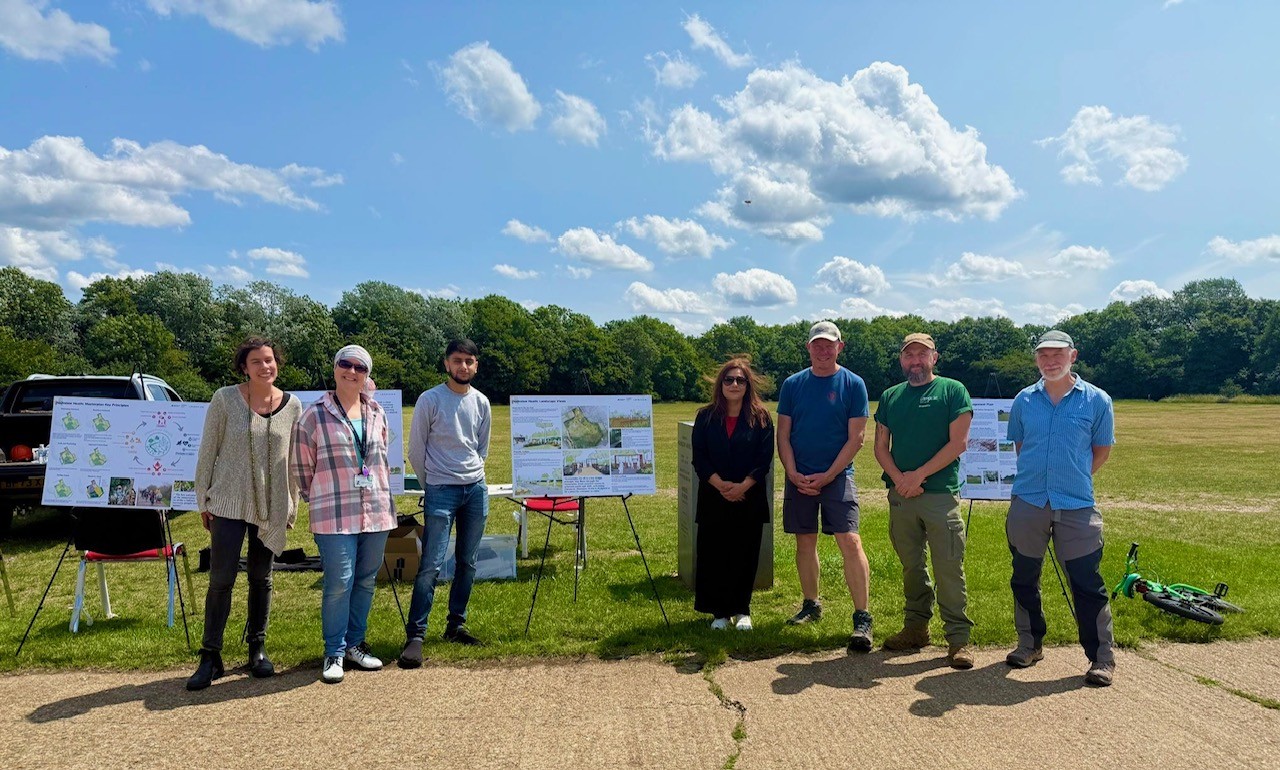
We are seeking feedback from residents and stakeholders to ensure that the masterplan reflects the needs and aspirations of the community. Your input will help:
Improve visitor experience and facilities
Enhance biodiversity and conservation efforts
Increase accessibility and connectivity
Develop recreation and educational opportunities
By participating, you have the chance to influence decisions that will shape the future of Hounslow Heath.
Some opportunities recognised:
- Becoming a key destination space for nature based recreational activities and environmental education and training
- Elevate designation status to SSI or National Nature Reserve
- Species reintroductions
- Enhancements for residents’ mental and physical wellbeing
- Rationalising cycle route provision and providing new green links
- Re-establishing a wetland area
- Making Hounslow Heath a nationally important donor site for Adders

Who do we want to get involved?
We want to hear from:
Local residents and community groups
Nature and conservation enthusiasts
Schools and educational institutions
Recreational users (walkers, cyclists, etc.)
Local businesses
Stakeholder organisations (e.g., London Wildlife Trust, Crane Valley Partnership, FORCE, Zoological Society of London, MET, Lampton Greenspace, and relevant LBH departments)
Update 2026
Year 1 Habitat Restoration Works at Hounslow Heath, February and March 2026
What Is Happening?
Essential habitat restoration works are planned for February 2026 with limited activity possibly extending into early March, depending on ecological advice.
(note: If adders or nesting birds become active early, work will pause immediately.)
As part the delivery of a new 10‑Year Habitat Management Plan to protect and improve Hounslow Heath, and Council’s wider commitment to Nature Recovery works will include:
Targeted scrub reduction will take place in Parcels 13, 17, 19, 21 and 38 (see map) to:
- Re‑open valuable heathland and important grassland habitats
- Improve sunny basking spots for adders
- Protect rare plants and insects
- Maintain a healthy mosaic of different habitats
All works follow ecological guidance and avoid sensitive areas such as reptile hibernation sites.
Why Winter?
Because winter windows are short, Year 1 will be delivered across two winters (2025/26 and 2026/27).
Winter is the ideal time for conservation works because:
- Adders are overwintering
- Birds are not nesting
- Plants are dormant
- Ground disturbance is reduced
How the Year 1 Habitat works fits in with the wider Hounslow Heath masterplan and 10 Year Habitat Management Plan
The Year 1 habitat works form part of Phase 1, which has been strategically designed so the Hounslow Heath Masterplan and the 10‑Year Habitat Management Plan can be delivered together in coordinated phases. This ensures early habitat improvements, access upgrades and safety measures all support each other, creating strong foundations for later phases and long‑term recovery of the Heath.
Together, these set a clear, community‑led vision to:
- Restore the Heath’s unique habitats and protect wildlife
- Improve access, safety and visitor experience
- Strengthen community involvement and long‑term stewardship
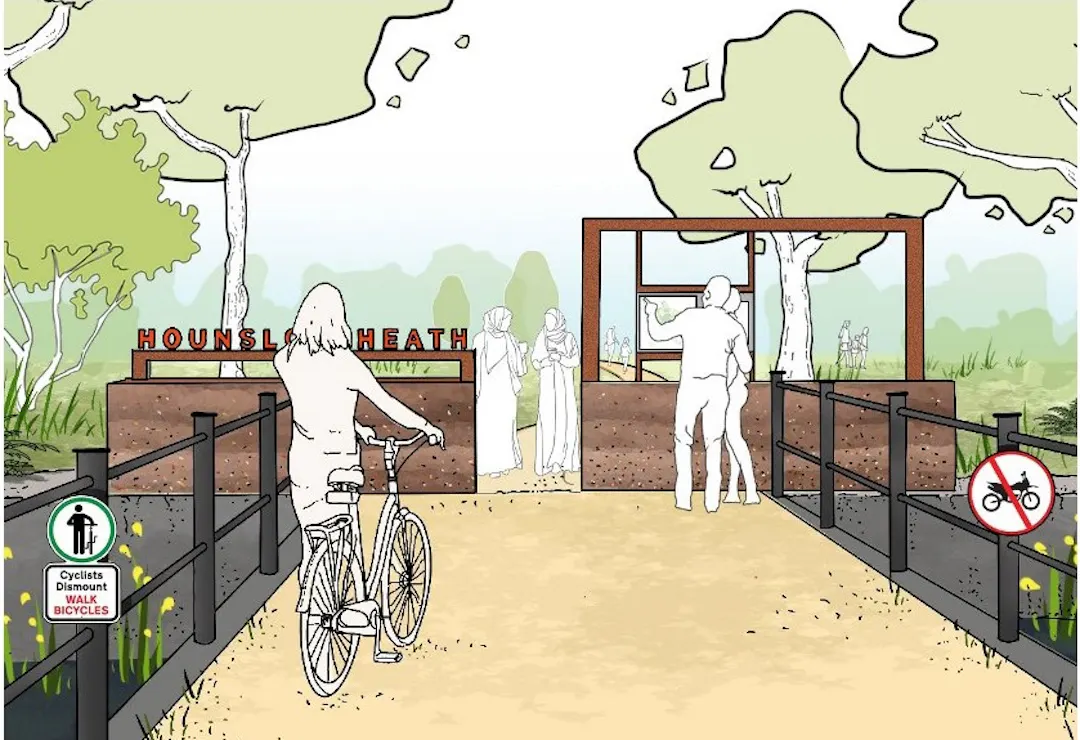
Phase 1 infrastructure and landscape improvements Priorities that support both ecology and visitor experience, includes:
- Better entrances and boundary treatments
- Accessible paths and improved wayfinding
- Clearer sightlines to create a safer, more welcoming environment
Phase 1 Nature Recovery priorities include contribution to long‑term habitat restoration by:
- Restoring heathland and grassland
- Managing scrub sustainably
- Strengthening reedbed resilience
- Protecting the nationally important adder population
- Embedding climate‑resilient habitat design and wildfire mitigation
The wider Hounslow Heath Masterplan improvement programme aims to address:
- Inequalities in access to safe, high‑quality green space
- Social isolation and anti‑social behaviour
- Barriers faced by women, ethnic minority groups and disabled visitors
- Green travel connectivity and skills/volunteering opportunities
- Safer design principles that support the Violence Against Women Strategy
Building for the Future
Beyond Phase 1, future phases, which are funding dependent, will continue restoring heathland and grassland, improving paths, entrances and wayfinding, enhancing safety, and expanding education, volunteering and community activities, along with exploring aspirations for a new Heath hub with café and learning spaces, transforming the former visitor centre into a dedicated rangers hut and looking at elevating the status of Hounslow Heath to a Site of Special Scientific Interest SSI for Adders or a National Nature Reserve.
Hounslow Heath is the only statutory Local Nature Reserve in the borough, designated in 1991. It is also classified as a Site of Metropolitan Importance and part of the Metropolitan Green Belt.
Covering 82 hectares, the site features:
- Rare heathland, acid and neutral grassland, scrub, broad leaved woodland and wetland habitats
- 230 plant species
- 342 invertebrate species, including nationally rare species
- Notable bird and bat populations
- A nationally significant adder population
The London Wildlife Trust have been conducting field surveys to map species, and a 10-year habitat management plan is now available to view.
There are habitat works programmed in February 2026 to restore these habitats as it is essential to safeguard the site’s long‑term ecological health.
Find out more about the first phase of works at the bottom of this page under 'Year 1 Habitat Restoration Works at Hounslow Heath'.
In partnership with a team of landscape architects and consultants, we are committed to protecting and enhancing this unique environment and are in the process of developing a masterplan to guide the future of the Heath.
Please note the area titled as Hounslow Heath Open Space is part of London Borough of Richmond and is not included in this Masterplan.
The masterplan will address key areas such as:
Access and movement around the site
Signage and street furniture
Formal and informal recreation
Existing buildings and visitor facilities
Parking provision
Nature recovery and conservation
Links to wider initiatives like the Crane Valley Trail
What are we seeking?
We are seeking feedback from residents and stakeholders to ensure that the masterplan reflects the needs and aspirations of the community. Your input will help:
Improve visitor experience and facilities
Enhance biodiversity and conservation efforts
Increase accessibility and connectivity
Develop recreation and educational opportunities
By participating, you have the chance to influence decisions that will shape the future of Hounslow Heath.
Some opportunities recognised:
- Becoming a key destination space for nature based recreational activities and environmental education and training
- Elevate designation status to SSI or National Nature Reserve
- Species reintroductions
- Enhancements for residents’ mental and physical wellbeing
- Rationalising cycle route provision and providing new green links
- Re-establishing a wetland area
- Making Hounslow Heath a nationally important donor site for Adders

Who do we want to get involved?
We want to hear from:
Local residents and community groups
Nature and conservation enthusiasts
Schools and educational institutions
Recreational users (walkers, cyclists, etc.)
Local businesses
Stakeholder organisations (e.g., London Wildlife Trust, Crane Valley Partnership, FORCE, Zoological Society of London, MET, Lampton Greenspace, and relevant LBH departments)
Update 2026
Year 1 Habitat Restoration Works at Hounslow Heath, February and March 2026
What Is Happening?
Essential habitat restoration works are planned for February 2026 with limited activity possibly extending into early March, depending on ecological advice.
(note: If adders or nesting birds become active early, work will pause immediately.)
As part the delivery of a new 10‑Year Habitat Management Plan to protect and improve Hounslow Heath, and Council’s wider commitment to Nature Recovery works will include:
Targeted scrub reduction will take place in Parcels 13, 17, 19, 21 and 38 (see map) to:
- Re‑open valuable heathland and important grassland habitats
- Improve sunny basking spots for adders
- Protect rare plants and insects
- Maintain a healthy mosaic of different habitats
All works follow ecological guidance and avoid sensitive areas such as reptile hibernation sites.
Why Winter?
Because winter windows are short, Year 1 will be delivered across two winters (2025/26 and 2026/27).
Winter is the ideal time for conservation works because:
- Adders are overwintering
- Birds are not nesting
- Plants are dormant
- Ground disturbance is reduced
How the Year 1 Habitat works fits in with the wider Hounslow Heath masterplan and 10 Year Habitat Management Plan
The Year 1 habitat works form part of Phase 1, which has been strategically designed so the Hounslow Heath Masterplan and the 10‑Year Habitat Management Plan can be delivered together in coordinated phases. This ensures early habitat improvements, access upgrades and safety measures all support each other, creating strong foundations for later phases and long‑term recovery of the Heath.
Together, these set a clear, community‑led vision to:
- Restore the Heath’s unique habitats and protect wildlife
- Improve access, safety and visitor experience
- Strengthen community involvement and long‑term stewardship
Phase 1 infrastructure and landscape improvements Priorities that support both ecology and visitor experience, includes:
- Better entrances and boundary treatments
- Accessible paths and improved wayfinding
- Clearer sightlines to create a safer, more welcoming environment
Phase 1 Nature Recovery priorities include contribution to long‑term habitat restoration by:
- Restoring heathland and grassland
- Managing scrub sustainably
- Strengthening reedbed resilience
- Protecting the nationally important adder population
- Embedding climate‑resilient habitat design and wildfire mitigation
The wider Hounslow Heath Masterplan improvement programme aims to address:
- Inequalities in access to safe, high‑quality green space
- Social isolation and anti‑social behaviour
- Barriers faced by women, ethnic minority groups and disabled visitors
- Green travel connectivity and skills/volunteering opportunities
- Safer design principles that support the Violence Against Women Strategy
Building for the Future
Beyond Phase 1, future phases, which are funding dependent, will continue restoring heathland and grassland, improving paths, entrances and wayfinding, enhancing safety, and expanding education, volunteering and community activities, along with exploring aspirations for a new Heath hub with café and learning spaces, transforming the former visitor centre into a dedicated rangers hut and looking at elevating the status of Hounslow Heath to a Site of Special Scientific Interest SSI for Adders or a National Nature Reserve.